Obesity has become a defining public health crisis of our time, one that’s expensive, deadly, and deeply political. Two countries, the United States and the United Kingdom, offer two starkly different strategies in confronting this issue. A closer look at their policies reveals a deeper question: Do we see obesity as a personal failure, or as a system-level malfunction?
The AMA Journal of Ethics article “What’s Wrong with the U.S. Approach to Obesity?” by Rogan Kersh and James Morone dissects the American response. Their conclusion? The U.S. doubles down on individual responsibility, emphasizing personal willpower, food choices, and fitness habits, avoiding the very environments that shape those choices. This has kept policymakers stuck, with structural reforms often dismissed as “nanny state” overreach.
Contrast this with the U.K., where policies lean heavily into regulation. The British government has implemented sugar taxes, banned junk food advertising during children’s programming, and funded school-based health programs. These interventions may sound excessive to the American ear, but they represent a clear acknowledgment: the food environment matters and it needs adjustment.
Both articles address the growing obesity crisis in the United States and the United Kingdom. The first article compares how the two countries view and respond to obesity, while the second discusses the role of the U.S. government in combating it. Together, they show a difference in both countries, where the U.K. treats obesity as a societal issue requiring the help of the government, whereas the U.S. focuses on personal responsibility and individual medical treatment.
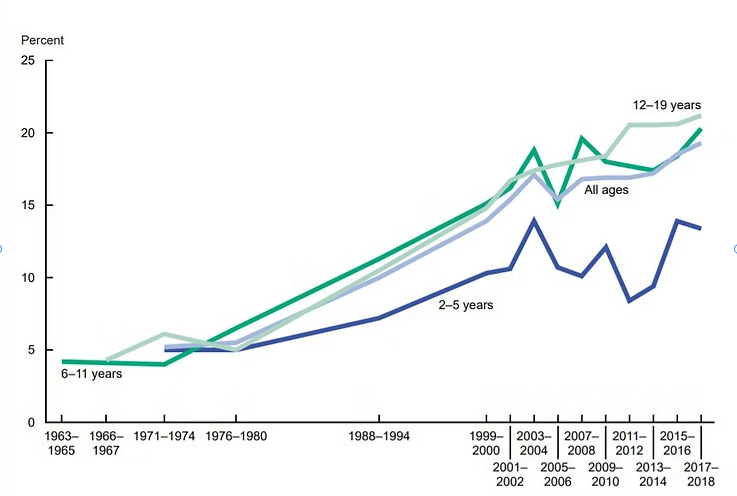
Analysis
The U.K. approach is active, with a social view on obesity. Policies such as banning junk food from schools, restricting the promotion of unhealthy foods, and incorporating nutrition into the school curriculum have been implemented by the government. These are aimed at altering the setting in which food choices are made, making healthy food more accessible and acceptable therefore making healthier eating a norm.
On the other hand, the U.S. has left the fight against obesity to the citizens themselves, with a focus on education, corporate responsibility on a voluntary basis, and small-scale community efforts. The federal government has supported obesity-related initiatives such as Healthier US and the Steps to a Healthier US initiative, but these initiatives have no credibility to match the U.K.’s policies.
Furthermore, the influence of the food industry has kept more drastic action at bay, as the second article’s examination of political pressures on public health policy demonstrates. The U.K.’s top-down approach has generated systemic change, whereas the U.S.’s decentered system has resulted in broken efforts. In the U.S., initiatives like advocating physical education in schools, or updating dietary recommendations have been implemented, but with little funding and effort. Also, federal-level controversies, as seen in the congressional hearings described in the second article, more likely revolve around whether government action is even necessary.
Finally, the first article observes that American public health campaigns are typically framed in terms of personal failures. Ranging from poor diet and lack of effort, instead of as the result of an environment that promotes unhealthy conduct.This is the opposite of the U.K.’s appeal for that environment to be changed to promote healthier choices. The second article confirms this, since the majority of government-funded initiatives such as the USDA’s Food Guide Pyramid revisions and the “Calories Count” campaign draw upon individual responsibility rather than regulatory change. The first article raises an ethical issue: is it appropriate for a government to do nothing as an entire generation wastes away with worsening obesity-related morbidity? The U.K.has determined that it is not, systematically going about remaking food environments. In the US, however, the refusal to regulate the food industry and pass clearer policies suggests that corporate and economic interests will always precede public health. The second article implicitly supports this criticism by revealing how government actions, as good as they may be, are generally formulated or discredited by industry influence.
My Perspective
Both articles make compelling points, and I find the U.K.’s approach to be more effective in addressing obesity as a public health crisis. The U.S.’s reliance on individual responsibility ignores the reality that people’s choices are heavily influenced by their environment. Without significant policy shifts, such as stricter regulations on advertising and improved access to healthy food, obesity rates in the U.S. will likely continue to rise. While personal responsibility is important, systemic change is necessary to make healthy living more accessible. The U.K. recognizes this by implementing policies that shape food environments and health education, whereas the U.S. remains tangled in debates over whether government intervention is warranted at all. The effectiveness of tackling obesity requires a balance between educating individuals and holding corporations accountable for creating an environment that fosters unhealthy habits. Until the U.S. acknowledges the need for structural changes like those in the U.K., its public health crisis will persist.
Articles Included in Analysis:
Kersh, Rogan, and James Morone. “What’s Wrong with the U.S. Approach to Obesity?” AMA Journal of Ethics, American Medical Association, Apr. 2010, https://journalofethics.ama-assn.org/article/whats-wrong-us-approach-obesity/2010-04.
Women’s Congressional Policy Institute. “Obesity and the Federal Government’s Role in Combating the Epidemic.” Women’s Congressional Policy Institute, https://www.wcpinst.org/source/obesity-and-the-federal-governments-role-in-combating-the-epidemic/.

 The Health Policy Journal
Leave a comment